A landmark with a job
The Laxey Wheel opened on 27 September 1854. Designed by Robert Casement, it served the mine by powering pumping machinery. Its diameter is 72 feet 6 inches, roughly 22 metres. The scale is memorable, but the job is the key to understanding it: keeping water moving out of workings below ground.
Follow the water, then the motion
Water collected from the hills was brought through the supply system to the wheel. Water entering the buckets made the wheel turn. That rotating movement was passed into a rod arrangement and a T-rocker to operate the pumps. The route contains two different stories: where the water travelled, and where the mechanical movement travelled. Keeping those routes separate makes the whole system easier to follow.
An energy chain on paper
Draw four boxes: hillside water, turning wheel, moving rod, pumping water. Put an arrow between each. Now label each arrow with what is being passed along. In the first part it is water and its available energy; farther along it is mechanical motion. The drawing will not reproduce the machine’s geometry, but it gives you a framework for reading an illustrated explanation or looking at the site.
Do not mistake an illustration for a map
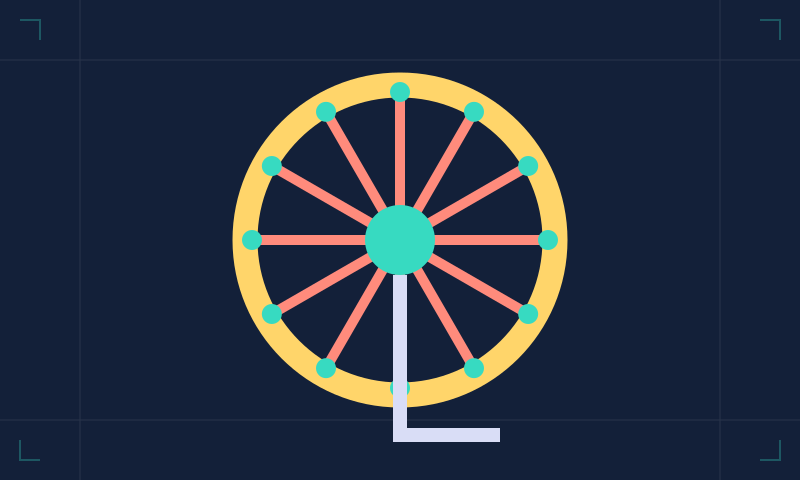
Our wheel artwork is a deliberately simplified original drawing. It is not a plan of the mine, a visitor route or a precise technical model. For current access, opening arrangements and visitor advice, use Manx National Heritage’s own site. Historic landmarks can have areas with different access conditions, and an old photograph or an attractive diagram is no basis for assuming you can walk everywhere shown.
A useful way to visit an engineering object
Choose one input and follow it as far as the interpretation allows. Then start again with the output. Ask where continuous rotation becomes another kind of movement, and which parts carry a load rather than simply sitting in place. You do not need to recognise every component on the first visit. Seeing one complete chain from supply to useful work is more satisfying than collecting a list of parts without understanding their connection. The wheel offers a grand view of a very practical problem.
TAKE ANOTHER BYTE
Explore the heritage collectionSources & further reading
References support the historical or technical facts. Paper exercises and comparisons are our own explanatory activities.
Researched and written with AI assistance, edited for the Really Byte collection. Spotted an error? Tell us. Read our editorial approach.